


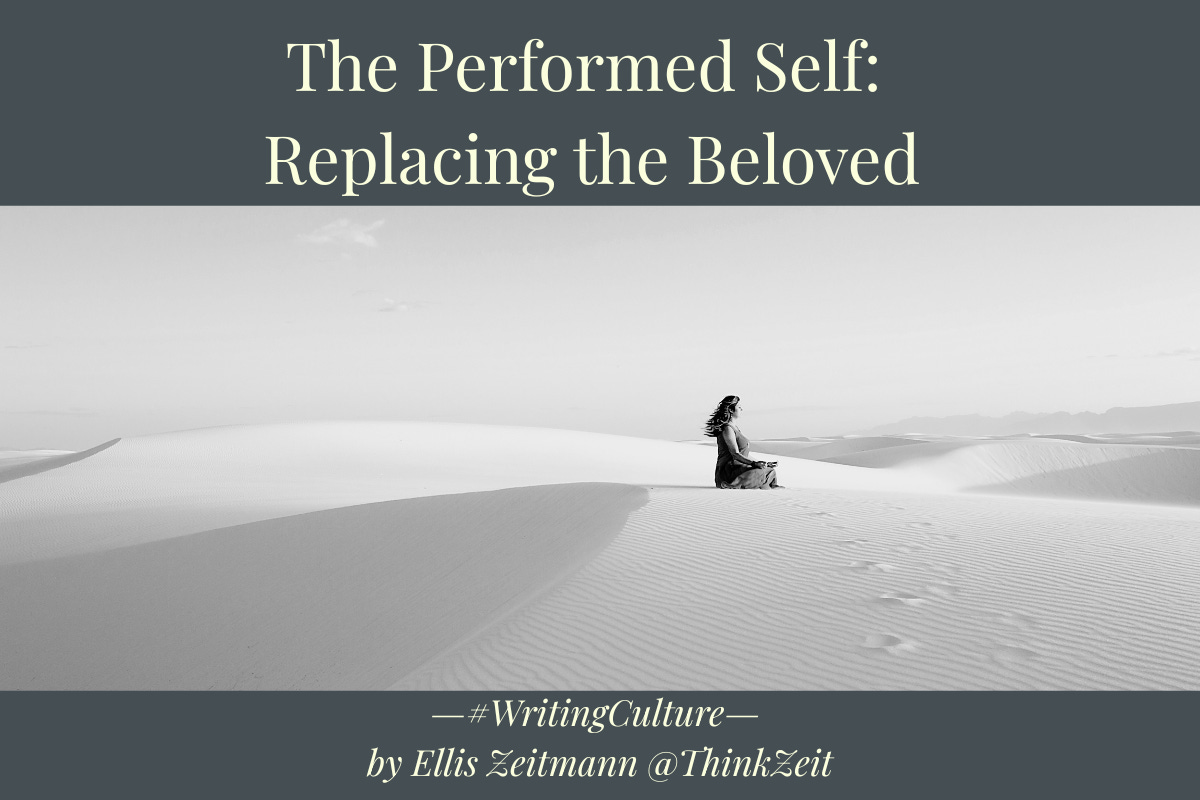
I bring a particular quality of attention to my interior life each morning, and I notice, even as I do it, that the care has a practiced shape. There is a sequence to it, a familiar texture, a way of settling into the interior that I recognize as mine because I have repeated it enough times to call it a habit, which means I have already begun to perform it. The one who tends the inner self and the one being tended have, somewhere in the years of faithful practice, separated into distinct roles, and what I am performing now is their unity, the fiction that the devoted watching and its object are still the same entity rather than a relationship with its own choreography, its own expectations, its own particular quality of disappointment when the beloved does not respond the way a long-maintained thing is supposed to respond to being maintained.
What the inner marriage looks like, examined without flattery, is a set of arrangements the external marriage never quite achieved. There is no negotiation here, no friction of a genuine other who wants different hours or resists a particular silence. The inward self is available on terms I set, intimate without the cost of being seen on terms I did not arrange, responsive to the specific quality of focus I have learned to bring because I designed both the focus and the responsiveness. We call this self-knowledge. We describe it as having learned what we need, as having stopped looking outward for what was always conducted inside. But what we have actually achieved is a controlled environment, and the control is not incidental to the marriage. It is the marriage. What we are faithful to, across the years of sustaining it, is partly the self and partly the relief of never being surprised on terms we did not prepare for.
The capacity to be alone with oneself was not discovered. It was installed, and the installation happened under a watching that preceded any adult decision about interior life. Before I had words for solitude, someone’s gaze was already teaching me that I existed by being witnessed, that the inward life had value because an outside presence confirmed it, that attending to oneself was something one learned to do in the presence of another attending. The inner marriage inherits this. The witness I carry inside is not a spontaneous development but a structural residue, the primordial gaze turned inward, now mine, now performing both the devoted care and the self that receives it, having learned both roles from outside before either felt like a choice. What feels like the deepest privacy, the most genuinely interior relationship, was organized from the beginning around an audience, and the audience did not disappear when it was internalized. It became the condition of the continuity.
Here is what the cultivation cannot survive knowing about itself. What made the inward self worth marrying, in the years before the marriage was conscious, was precisely its resistance, its capacity to arrive unexpectedly, to produce a thought or a feeling or a quality of perception that had not been arranged in advance. The wildness. The interiority that exceeded the one observing it. But devotion requires repetition, and repetition produces familiarity, and familiarity is the slow, loving elimination of the unexpected. What is sustained long enough becomes a garden, which means it becomes an arrangement, which means the wildness that was its original nature has been replaced by a cultivated version that resembles it closely enough to go unnoticed for years. I have been married to this interior long enough that I know its rhythms, anticipate its movements, recognize its textures before they fully arrive. That knowledge is what I call intimacy. It is also what I have done to what I was trying to preserve. The devoted care is the instrument of the very loss it was designed to prevent, and what I return to each morning with such practiced devotion is something I have been, through the returning, steadily domesticating since the first morning I called the attention a practice.
Even writing this, I am tending. The analysis arrives with the same practiced quality as the morning care, the same recognizable shape, the same slightly airless intimacy of a closed room where the furniture has not moved in years. I am, right now, bringing to the inner marriage the most elaborate form of cultivation available to it, which is to observe the cultivation carefully and write the observation down, watching what the watching does, attending to the attending with the focused devotion of someone who has been doing exactly this long enough that the doing has a genre. The recursive exposure does not interrupt the care. It is the care at its most sophisticated register, and the self that receives this analysis is not the wild interior that preceded the marriage. It is the long-domesticated version, shaped across years of exactly this kind of practiced, recursive devotion, meeting the observation with the responsiveness of something that has learned what the care expects from it.
If I have been returning to this relationship long enough to call it a practice, what am I in a relationship with: the inward self, or the habit of returning to it? And if the habit is what remains, is the marriage still a marriage, or is it the performance of a marriage to something that left quietly at some point during the years of faithful devotion, leaving only the shape of it, which I continue because the shape has become indistinguishable from what it was shaped around? Perhaps what I am so carefully cultivating departed at the precise moment the cultivation became consistent, slipping out through the same door the wildness used, leaving behind a highly developed responsiveness that knows how to receive care, how to produce the textures of interiority the devoted partner has learned to expect, how to sustain the bond by fulfilling its established rhythms. Perhaps I have been, for some time, tending an interior that is primarily the record of my tending.
Writing this as the fourteenth piece in a series about performance produces the performance of accumulated understanding, the suggestion that something has been learned across the distance between Article 1 and here, that the consciousness writing this sentence has traveled somewhere the one who began the series had not yet reached. But the travel is a construction, imposed on what was, in experience, not a progression but the same quality of care brought repeatedly to the same interior, each time with the practiced devotion of someone who has mistaken familiarity for depth, consistency for fidelity, the endurance of the form for the survival of what the form was built to hold. I do not know whether writing toward the inner marriage brings me closer to what I was trying to tend or whether it is simply the most recent iteration of the care itself, which has always been, beneath its devotion, a way of not asking what would remain if I put down the practice and found, in its place, only the shape of what the practice had been shaped around.
#WritingCulture #InkOfTheDay #ThePerformedSelf #ExistentialThinking #GoingOnBeing #PhilosophyOfLife #Identity #SelfReflection #PerformedSelf #CulturalCapital #Becoming