


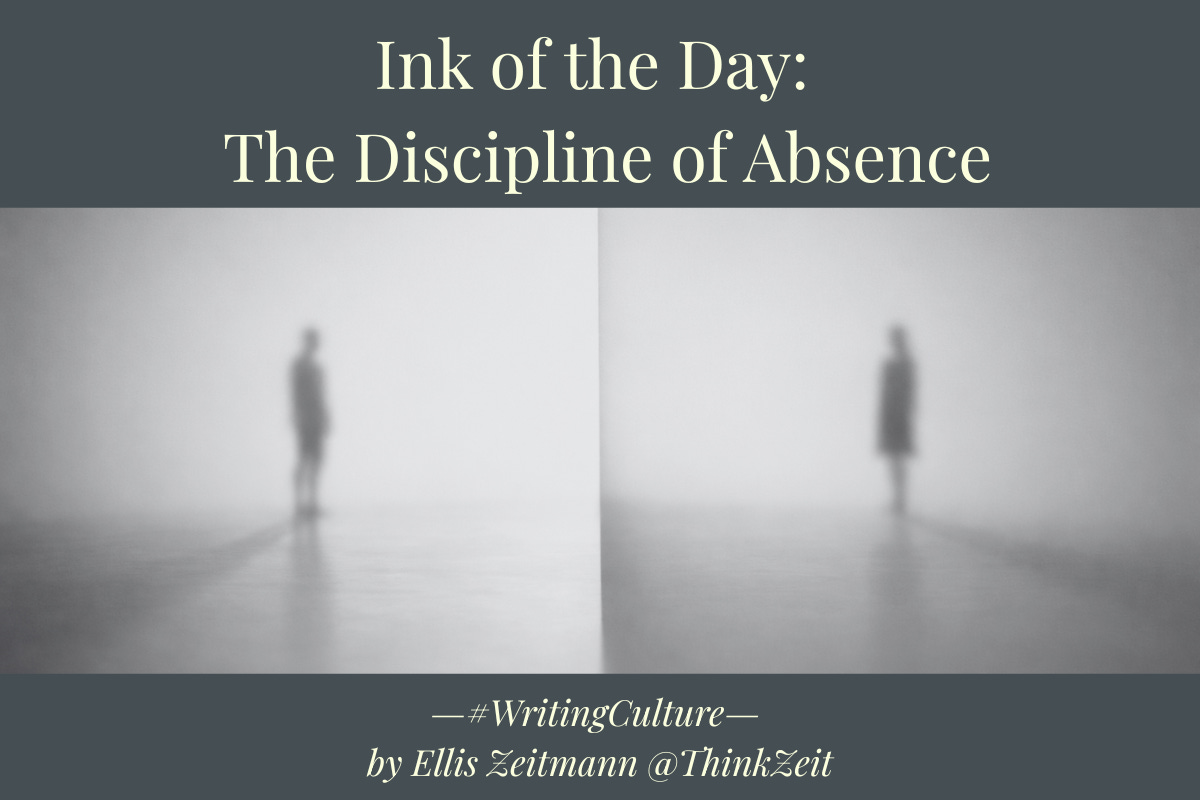
I write about estrangement as loss, but notice how carefully I maintain the separation. Right now, not reaching out to the person I claim to have lost, I arrange the non-contact into evidence of respect, boundaries, growth. I draft messages I never send, remember birthdays I do not acknowledge, monitor their life from the periphery while performing the discipline of absence. The performance of having lost them requires keeping them lost, and perhaps this maintenance is not the consequence but the purpose.
The rituals of sustained separation accumulate into meaning. I compose the text that says “I’ve been thinking about you” and delete it before sending, the deletion itself becoming proof of restraint. I see their name appear in contexts that overlap with mine and choose not to acknowledge the intersection, the not-acknowledging curated as wisdom rather than avoidance. I catalog the moments when I almost closed the gap, each almost preserved as evidence that I am someone who respects boundaries, who understands when to let go, who has learned the mature art of accepting what cannot be recovered. The estrangement I narrate as something that happened to me is actually something I perform continuously, each day of non-contact a renewed choice I frame as inevitable consequence.
The capacity to maintain separation was installed earlier than the triggering event. Perhaps I was performing this particular absence before I knew I was, before the conflict that supposedly severed us, before the moment I point to as the origin. The voice that says “I’ve lost them” is older than any specific rupture. It may be the primordial practice of managing closeness through removal, installed when I first learned that people who are present-but-absent feel safer than people who are simply present, that love protected by space cannot disappoint in the ways that proximity inevitably does. The estrangement I enact now echoes a pattern established before I had language to name it, and what I call loss might only be the adult elaboration of an ancient defense against the terror of being known completely, of existing as coherent in another’s sustained gaze.
But notice what happens when I try to locate the desire beneath the performance. Do I want them back, or do I want to want them back? Do I miss them, or do I miss the version of myself who was capable of missing them before I recognized missing as performance? I cannot access the desire itself because desire does not exist prior to its performance. There is no moment before the wanting becomes aware of itself as wanting, no pure longing unpolluted by the consciousness that watches me long. What I call my desire for reconciliation might only be my desire to be seen as someone who desires reconciliation, and what I call my need for boundaries might only be my need to perform the self-possession that boundaries signify. The estrangement constructs me as someone who has suffered meaningfully, been wronged significantly, respects limits admirably, possesses depth that makes absence ache. But I cannot know whether I maintain the separation because I need protection from them or because I need the identity that their absence allows me to perform. The not-knowing is not a temporary confusion to be resolved through sufficient self-examination. It is the structural condition of consciousness observing its own constructions.
Even writing this, I perform it. I describe the maintained separation while maintaining it, the observation becoming another reason not to reach out because I am now too self-aware to perform simple reconciliation, too psychologically sophisticated to pretend the estrangement is anything but carefully curated. The analysis itself is offered to the same internal audience that watches me not-contact them, and that audience records this recognition as further evidence that I have depth, insight, the courage to see through my own mechanisms.
If I stopped performing what I have lost, stopped curating the estrangement as meaningful separation, stopped narrating their absence as my depth, would anything remain? The question assumes there is something to discover beneath the performance, some bedrock desire that exists prior to its construction. But perhaps there is no beneath. Perhaps what I call my feelings about this person are only the feelings I perform about this person, and beneath that performance there is not authentic desire but only the void where desire should be, the gap between stimulus and response where consciousness constructs the narrative that will explain to itself why it acts as it acts. I cannot close the separation to discover what I really want because the wanting itself only exists in the performance of maintaining or closing it. The estrangement is not covering my true feelings. The estrangement is the only feelings there are. And if I reached out now, I would discover not what I authentically desired all along but only what new performance the act of reaching out would allow me to construct, what new self the reconciliation or rejection would permit me to become.
Writing about estrangement reveals that the person I claim to miss may be less absent than the person I have become through missing them. Every word spent analyzing maintained separation maintains it further, and now the estrangement includes not just them but the version of myself who existed before I learned to construct identity through carefully curated absence. I write to the person I keep away, but the real audience is the self I perform by keeping them there, and that performance depends entirely on their continued removal. The recognition that I need them lost transforms nothing, resolves nothing, changes nothing. I will not reach out. I will not close the gap. Not because I have chosen this paralysis but because the paralysis is the condition, the structural impossibility of accessing desire that exists prior to its performance. This is not a problem I am working to solve. This is not a phase I am moving through. This is not a pattern I will eventually transcend through sufficient self-awareness. The not-reaching-out will continue, and I will continue to narrate it as depth, and the narration will continue to be performance, and there is no resolution to offer because resolution would require pretending there is something beneath performance to resolve toward. I refuse that comfort. Right now, finishing this sentence, I still do not reach out, and I cannot know whether that is what I want.
A quiet gratitude 🙏 to those we keep at a distance we claim to suffer, and to all who have maintained estrangements while discovering that the loss we narrate as our wound may be the performance we need more than we ever needed the presence we claim to mourn.
#WritingCulture #InkOfTheDay #ExistentialThinking #GoingOnBeing #PhilosophyOfLife #Identity #SelfReflection #PerformedSelf