


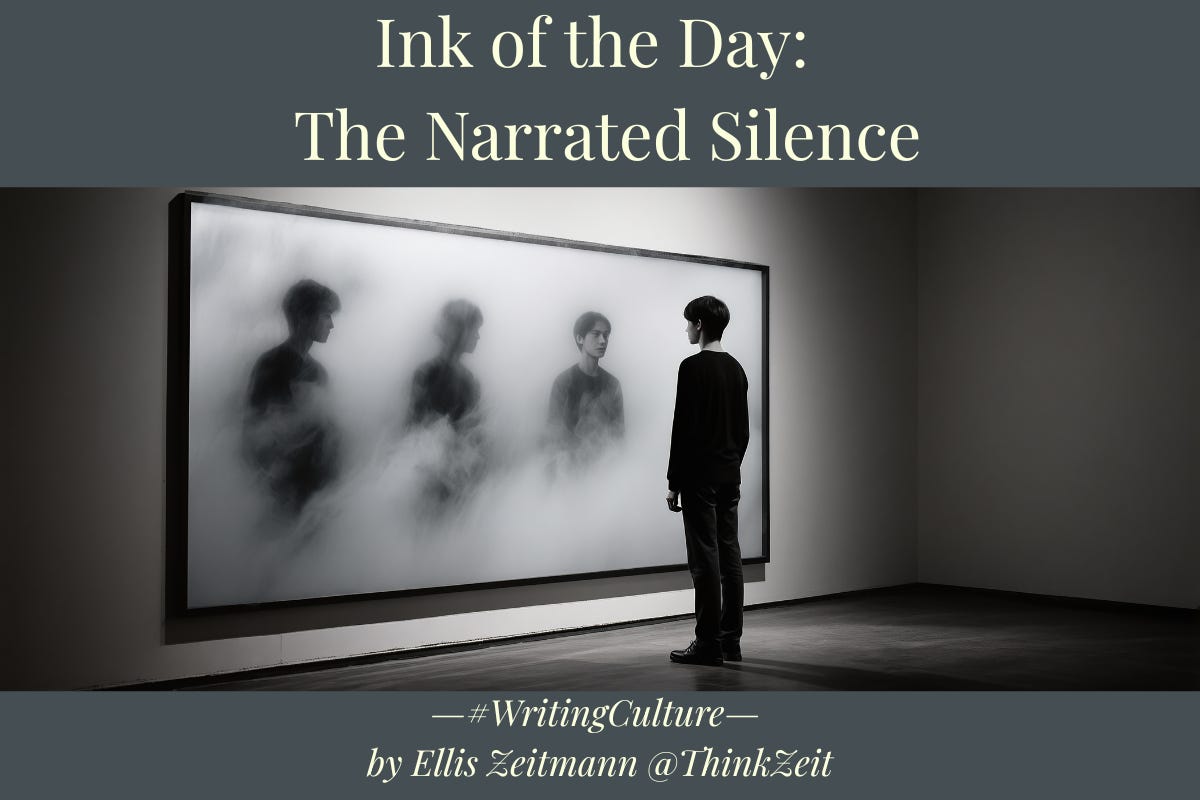
I write about solitude as refuge, but notice how carefully I stage the aloneness. Right now, sitting here without witnesses, I arrange myself into someone having meaningful solitude rather than someone simply isolated. I narrate the silence to myself. I observe my contemplation. The performance of being authentically alone requires an audience, and when no one else is watching, I become my own most attentive spectator.
When I finally achieve time by myself, I tell myself this is where the performed self can rest. But within minutes I am reporting to an internalized audience what this solitude means, what kind of person has this quality of aloneness. The walk becomes meaningful, the coffee contemplative, each activity curated as evidence of depth. I arrange my privacy as carefully as I curate my social presence, selecting what signals rich internal life rather than simple withdrawal.
The decision to withdraw, the choice itself is never neutral. It signals something. I am not avoiding people, I am choosing solitude. I am not hiding, I am reflecting. The distinction matters because someone is listening, and that someone is the internalized version of everyone I have ever performed for, compressed into a surveillance system I cannot escape even when I close the door. But the voice that narrates my aloneness is older than any adult audience. It is the primordial gaze that taught me I exist by being seen, installed before I had words to refuse it. I was never given the chance to be alone without being watched, so now I cannot be alone even in my own presence. The judgment sounds like mine only because I learned it before I knew there was a difference between being observed and being.
I suspect the relief of solitude is also its terror. Without external witnesses, the internal observer does not rest. It intensifies. Perhaps I seek solitude not to find myself but to control the audience, to manage witnessing on my own terms. With others, I risk being seen as incoherent. Alone, I can edit the performance in real-time, maintaining the illusion that someone coherent exists. The panic that arrives without self-observation reveals the truth: I am not avoiding being seen by others, I am avoiding the unwitnessed moment where consciousness threatens to dissolve into incoherence.
Even writing this, I perform it. I describe solitude as performed while sitting isolated, catching myself in the act of catching myself. But notice what happens in the instant before observation arrives, that microsecond of raw, unnarrated experience. I flee from it immediately, retroactively narrating to cover the gap. Perhaps consciousness is structurally incapable of being with itself unaccompanied not because we are social creatures but because unobserved consciousness threatens psychic dissolution. Self-awareness requires the split between observer and observed, and that split is not optional architecture but emergency scaffolding. The internal audience is what holds the illusion of coherence together.
If I stopped narrating my solitude, stopped framing alone time as meaningful, stopped reporting to myself what this aloneness proves about who I am, would anything remain? Or would I discover that the internal audience is not surveillance I have internalized but the only structure preventing consciousness from experiencing itself as fragments without theme, that what I call being alone with myself is the performance consciousness requires to believe it exists as someone rather than something, and that true solitude, unwitnessed and unnarrated, is not refuge but psychic death.
Writing while isolated produces its own audience, the one I am writing for, even if that audience is only the future self who will have written this. Each sentence pretends to locate the authentic self that emerges in privacy but constructs the version who narrates privacy as meaningful. The question I cannot answer: if I stopped performing for my internalized audience, would I still be capable of solitude, or would I discover that what I call aloneness is only the most desperate performance of all, the one that prevents me from encountering consciousness as it actually is, unwitnessed and chaotic and unbearable.
A quiet gratitude to the moments we claim as refuge, and to all who have sought to be with themselves while discovering that self-observation is the audience we cannot escape, learning that the authentic self we protect in privacy may be the emergency fiction we constructed to survive the terror of unnarrated existence.
—#WritingCulture— by Ellis Zeitmann @ ThinkZeit.
#WritingCulture #InkOfTheDay #ExistentialThinking #GoingOnBeing #PhilosophyOfLife #Identity #SelfReflection #PerformedSelf