


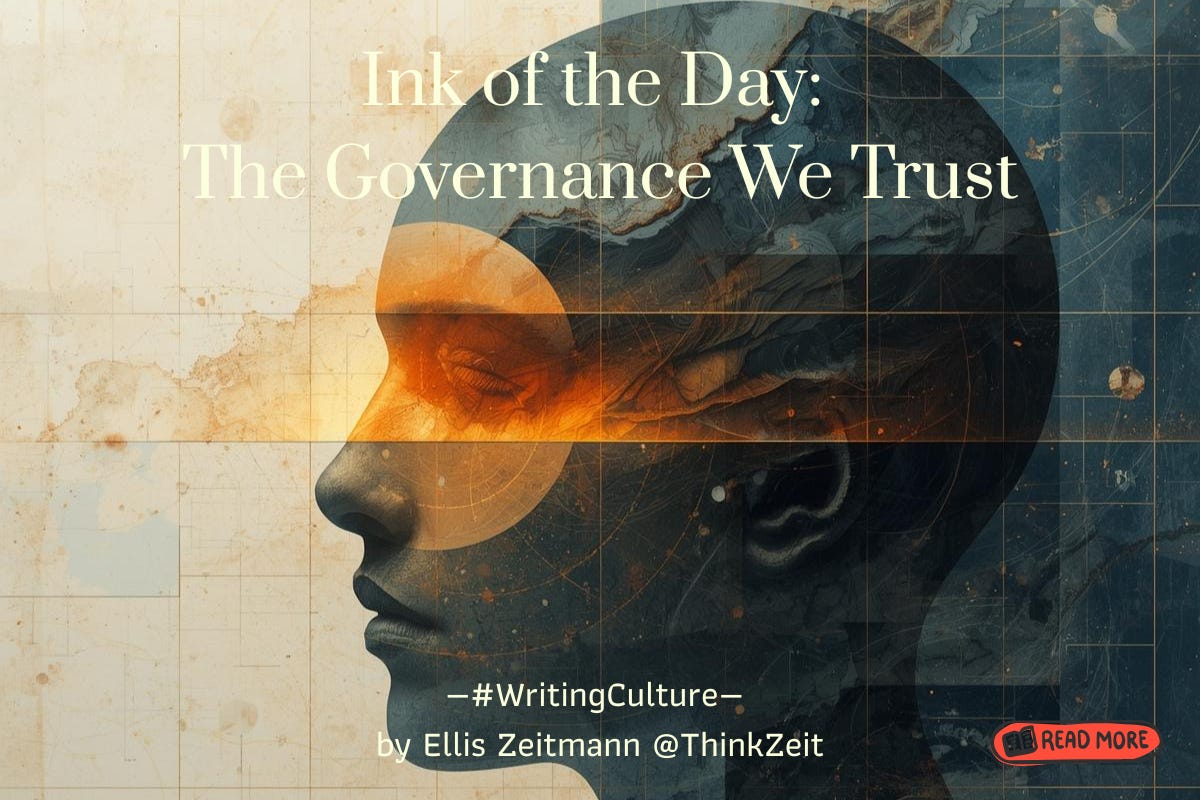
Thomas Aquinas is being rediscovered as a surprisingly modern guide to happiness. Passions, intellect, will. Order them correctly and life becomes more livable. Reading this, I feel the appeal immediately. There is something deeply reassuring about the promise that happiness can be supervised, brought into alignment.
And yet, right now, writing about this framework’s seductive clarity, I am arranging my thoughts into the same careful hierarchy I claim to question. Each sentence positioned, each observation governed. I notice this and tell myself the noticing is wisdom, but the noticing itself feels suspiciously well-managed. Critique of control becomes another instrument of governance.
Aquinas speaks of imperfect happiness, something attainable here and now. But I wonder whether our contemporary fascination with this idea is less about accepting imperfection and more about refining dominance over ourselves. We translate passions into impulses, impulses into systems, systems into habits. Reason becomes not a space of encounter but a supervisory function. And even this observation, even calling it supervision rather than care, gives me the satisfaction of having seen through something.
Psychoanalysis complicates this neatly balanced triad. Passions do not simply submit to intellect. They disguise themselves, borrow the language of rationality, perform cooperation. But here is what unsettles me more: writing this sentence about disguise, I feel intellectually competent. What I just wrote lands cleanly. Which means it is likely doing exactly what I claim passions do: performing understanding while protecting me from genuine exposure.
What disturbs me is not that Aquinas might be wrong, but that we may be too quick to convert his thought into a protocol for self-optimization. Imperfect happiness, stripped of its metaphysical humility, risks becoming a productivity tool. The will is praised for choosing the good, but rarely questioned for why it wants to choose at all. And having written that, I feel the quiet pride of someone who has identified a mechanism. Which is likely the mechanism’s most refined operation.
The unease is this: we prefer passions that can be educated because they reassure us that nothing truly foreign lives inside us. But what if happiness is less about arranging the inner hierarchy and more about tolerating the moments when it collapses. Not chaos as freedom, but exposure as truth. Though perhaps celebrating exposure is simply inverted oversight, the mind’s final way of remaining in charge even while claiming surrender.
Reflection
What if your ability to ask where reason becomes control is itself the oversight you most trust. What if the sophisticated awareness you have of your own defenses is the defense operating at its highest capacity. What if recognizing this structure in yourself is precisely how it continues.
—#WritingCulture— by Ellis Zeitmann @ ThinkZeit.
#InkOfTheDay #ExistentialThinking #GoingOnBeing #PhilosophyOfLife